Free lesson · Salah

Prayer words in Arabic, step by step

كَلِمَاتُ الصَّلَاةِ

Every word you say in salah, in order — with the Arabic, an easy transliteration and what it means. Learn them once and you’ll understand your prayer five times a day.

  • Steps10
  • LevelBeginner
  • IncludesAl-Fātiha

Reading the transliteration: ā, ī, ū are long vowels. An apostrophe (’) marks a sound from the throat (hamza or ‘ayn). Listening to a teacher is the best way to get each sound right.

1

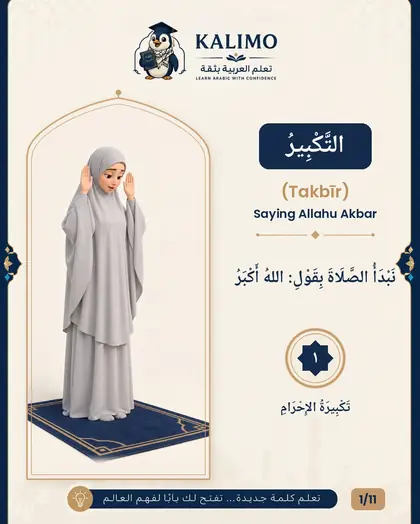
Takbīr — starting the prayer

Standing, raise your hands and begin the prayer.

اللَّهُ أَكْبَرُ

Allāhu akbar

Allah is the Greatest.

Word by word
ArabicSay itMeaning
اللَّهُAllāhuAllah
أَكْبَرُakbargreater, the Greatest

Tip: You say “Allāhu akbar” each time you move to a new position (except when rising from rukū‘).

A woman in hijab raising her hands to say Allāhu akbar
2

Seeking refuge and the basmala

Standing, before Al-Fātiha (said quietly).

أَعُوذُ بِاللَّهِ مِنَ الشَّيْطَانِ الرَّجِيمِ

A'ūdhu billāhi mina-sh-shaytāni-r-rajīm

I seek refuge in Allah from Satan, the outcast.

بِسْمِ اللَّهِ الرَّحْمَٰنِ الرَّحِيمِ

Bismillāhi-r-Rahmāni-r-Rahīm

In the name of Allah, the Most Merciful, the Especially Merciful.

3

Al-Fātiha — in every rak‘ah

Standing. Al-Fātiha is recited in every rak‘ah (unit) of the prayer.

  1. بِسْمِ اللَّهِ الرَّحْمَٰنِ الرَّحِيمِ ۝١

    Bismillāhi-r-Rahmāni-r-Rahīm

    In the name of Allah, the Entirely Merciful, the Especially Merciful.

  2. الْحَمْدُ لِلَّهِ رَبِّ الْعَالَمِينَ ۝٢

    Al-hamdu lillāhi Rabbi-l-'ālamīn

    [All] praise is [due] to Allah, Lord of the worlds -

  3. الرَّحْمَٰنِ الرَّحِيمِ ۝٣

    Ar-Rahmāni-r-Rahīm

    The Entirely Merciful, the Especially Merciful,

  4. مَالِكِ يَوْمِ الدِّينِ ۝٤

    Māliki yawmi-d-dīn

    Sovereign of the Day of Recompense.

  5. إِيَّاكَ نَعْبُدُ وَإِيَّاكَ نَسْتَعِينُ ۝٥

    Iyyāka na'budu wa iyyāka nasta'īn

    It is You we worship and You we ask for help.

  6. اهْدِنَا الصِّرَاطَ الْمُسْتَقِيمَ ۝٦

    Ihdina-s-sirāta-l-mustaqīm

    Guide us to the straight path -

  7. صِرَاطَ الَّذِينَ أَنْعَمْتَ عَلَيْهِمْ غَيْرِ الْمَغْضُوبِ عَلَيْهِمْ وَلَا الضَّالِّينَ ۝٧

    Sirāta-lladhīna an'amta 'alayhim, ghayri-l-maghdūbi 'alayhim wa la-d-dāllīn

    The path of those upon whom You have bestowed favor, not of those who have evoked [Your] anger or of those who are astray.

English translation of Al-Fātiha: Saheeh International, as published on the King Saud University Quran site (quran.ksu.edu.sa). Learn Al-Fātiha word by word →

Tip: After Al-Fātiha say آمِينَ (Āmīn — “O Allah, answer”). In the first two rak‘ahs, add a short surah such as Al-Ikhlas or Al-Kawthar.

4

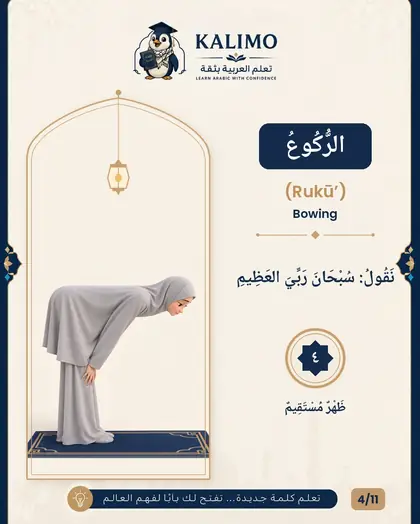
Rukū‘ — bowing

Say “Allāhu akbar” and bow, hands on your knees. Repeat 3 times.

سُبْحَانَ رَبِّيَ الْعَظِيمِ

Subhāna Rabbiya-l-'Azīm ×3

Glory be to my Lord, the Most Great.

Word by word
ArabicSay itMeaning
سُبْحَانَSubhānaGlory be to
رَبِّيَRabbiyamy Lord
الْعَظِيمِal-'Azīmthe Most Great
A woman in hijab bowing in rukū‘
5

Rising from rukū‘

Rise to standing while saying the first line, then say the second when you are upright.

سَمِعَ اللَّهُ لِمَنْ حَمِدَهُ

Sami'a-llāhu liman hamidah

Allah hears the one who praises Him.

رَبَّنَا وَلَكَ الْحَمْدُ

Rabbanā wa laka-l-hamd

Our Lord, and to You belongs all praise.

6

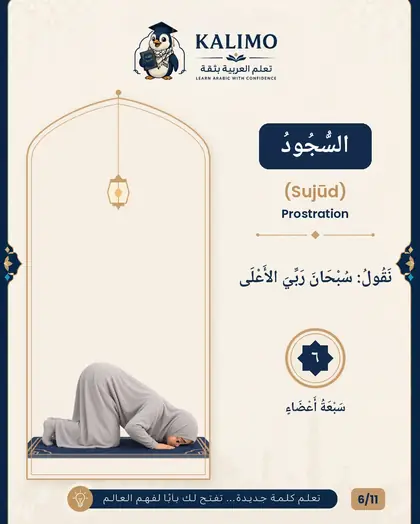
Sujūd — prostration

Say “Allāhu akbar” and go down: forehead and nose, both palms, both knees and toes on the ground. Repeat 3 times.

سُبْحَانَ رَبِّيَ الْأَعْلَى

Subhāna Rabbiya-l-A'lā ×3

Glory be to my Lord, the Most High.

Word by word
ArabicSay itMeaning
سُبْحَانَSubhānaGlory be to
رَبِّيَRabbiyamy Lord
الْأَعْلَىal-A'lāthe Most High

Tip: Notice the pattern: in rukū‘ you say al-‘Azīm (the Most Great); in sujūd, when you are lowest, you say al-A‘lā (the Most High).

A woman in hijab in sujūd (prostration)
7

Sitting between the two sujūds

Sit up briefly, then make the second sujūd with the same words.

رَبِّ اغْفِرْ لِي

Rabbi-ghfir lī ×2

My Lord, forgive me.

8

Tashahhud — the sitting

Sitting after every two rak‘ahs, and in the last sitting.

التَّحِيَّاتُ لِلَّهِ، وَالصَّلَوَاتُ، وَالطَّيِّبَاتُ

At-tahiyyātu lillāhi wa-s-salawātu wa-t-tayyibāt

All greetings, prayers and good words are for Allah.

السَّلَامُ عَلَيْكَ أَيُّهَا النَّبِيُّ وَرَحْمَةُ اللَّهِ وَبَرَكَاتُهُ

As-salāmu 'alayka ayyuha-n-nabiyyu wa rahmatu-llāhi wa barakātuh

Peace be upon you, O Prophet, and the mercy of Allah and His blessings.

السَّلَامُ عَلَيْنَا وَعَلَى عِبَادِ اللَّهِ الصَّالِحِينَ

As-salāmu 'alaynā wa 'alā 'ibādi-llāhi-s-sālihīn

Peace be upon us and upon the righteous servants of Allah.

أَشْهَدُ أَنْ لَا إِلَٰهَ إِلَّا اللَّهُ، وَأَشْهَدُ أَنَّ مُحَمَّدًا عَبْدُهُ وَرَسُولُهُ

Ash-hadu an lā ilāha illa-llāh, wa ash-hadu anna Muhammadan 'abduhū wa rasūluh

I bear witness that there is no god but Allah, and I bear witness that Muhammad is His servant and Messenger.

Tip: In the last sitting, the Ibrāhīmī prayer comes next.

9

As-Salāt al-Ibrāhīmiyya — in the last sitting

After the tashahhud, in the final sitting.

اللَّهُمَّ صَلِّ عَلَى مُحَمَّدٍ وَعَلَى آلِ مُحَمَّدٍ، كَمَا صَلَّيْتَ عَلَى إِبْرَاهِيمَ وَعَلَى آلِ إِبْرَاهِيمَ، إِنَّكَ حَمِيدٌ مَجِيدٌ

Allāhumma salli 'alā Muhammadin wa 'alā āli Muhammad, kamā sallayta 'alā Ibrāhīma wa 'alā āli Ibrāhīm, innaka Hamīdun Majīd

O Allah, send Your praise upon Muhammad and the family of Muhammad, as You sent it upon Ibrāhīm and the family of Ibrāhīm. You are Praiseworthy, Glorious.

اللَّهُمَّ بَارِكْ عَلَى مُحَمَّدٍ وَعَلَى آلِ مُحَمَّدٍ، كَمَا بَارَكْتَ عَلَى إِبْرَاهِيمَ وَعَلَى آلِ إِبْرَاهِيمَ، إِنَّكَ حَمِيدٌ مَجِيدٌ

Allāhumma bārik 'alā Muhammadin wa 'alā āli Muhammad, kamā bārakta 'alā Ibrāhīma wa 'alā āli Ibrāhīm, innaka Hamīdun Majīd

O Allah, bless Muhammad and the family of Muhammad, as You blessed Ibrāhīm and the family of Ibrāhīm. You are Praiseworthy, Glorious.

10

Taslīm — ending the prayer

Turn your head to the right and say it, then to the left and say it again.

السَّلَامُ عَلَيْكُمْ وَرَحْمَةُ اللَّهِ

As-salāmu 'alaykum wa rahmatu-llāh right, then left

Peace be upon you, and the mercy of Allah.

Al-Fātiha: Hafs ‘an ‘Asim, checked against the Tanzil “simple-enhanced” text. The words of rukū‘, sujūd, the tashahhud and the taslīm follow well-known authentic narrations (the tashahhud of Ibn Mas‘ūd and the Ibrāhīmī prayer as reported in Sahih al-Bukhari). English meanings are simple explanations for learners.

Questions

What do you say in rukū‘?

In rukū‘ (bowing) you say سُبْحَانَ رَبِّيَ الْعَظِيمِ — Subhāna Rabbiya-l-‘Azīm, “Glory be to my Lord, the Most Great” — usually 3 times.

What do you say in sujūd?

In sujūd (prostration) you say سُبْحَانَ رَبِّيَ الْأَعْلَى — Subhāna Rabbiya-l-A‘lā, “Glory be to my Lord, the Most High” — usually 3 times.

What does Allāhu akbar mean?

اللَّهُ أَكْبَرُ (Allāhu akbar) means “Allah is the Greatest” — greater than anything else. It opens the prayer and marks each move to a new position.

How do you end the prayer?

You end the prayer with the taslīm: السَّلَامُ عَلَيْكُمْ وَرَحْمَةُ اللَّهِ (As-salāmu ‘alaykum wa rahmatu-llāh), turning your head to the right and then to the left.

Are these the only words used in salah?

These are common, authentic wordings that most beginners learn first. Other authentic wordings and extra du‘ās exist, and schools of fiqh differ in some details — follow what your teacher taught you.

Why learn the meaning of the prayer words?

The words of salah are said in Arabic. When you understand what you are saying, it is easier to pray with presence and focus (khushū‘). Learning Arabic step by step helps you understand more of every prayer.

More free lessons

All free lessons →